Hong Kong Market Overview
The Hong Kong market closed lower on November 13, 2026, driven primarily by heavy selling across major technology stocks as global rate pressures dampened appetite for growth equities. Gains in energy producers partially offset broad tech weakness, but negative sentiment across large-cap internet names kept the Hang Seng Index pinned in negative territory throughout the session.
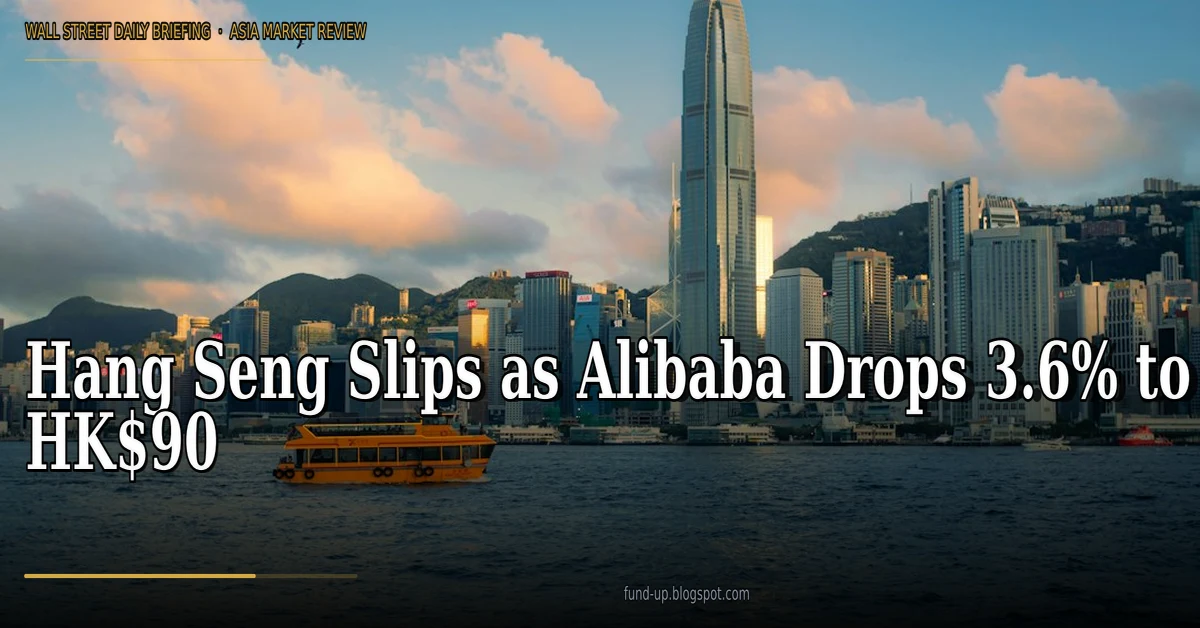
Trading across Hong Kong stocks today showed clear divergence between traditional sector fundamentals and high-valuation growth names. E-commerce giant Alibaba Group (9988.HK) dropped -3.62% to close at HK$90.4, while consumer electronics manufacturer Xiaomi (1810.HK) fell -3.47% to HK$28.94. Conversely, state-backed energy major PetroChina (0857.HK) advanced +2.89% to HK$10.34, accompanied by optical technology maker Sunny Optical (2382.HK), which gained +2.18% to HK$65.7. Decliners comfortably outnumbered advancers by a 3-to-1 ratio across major index components. The market session underscored how global yield volatility continues to weigh heavily on cash-flow discounting models for Asia tech assets, keeping broad regional valuations constrained.
Mainland China: A-Share Pulse & PBOC Watch
Mainland Chinese equity markets experienced moderate pressure as broader macro headlines focused on global yield movements and rate trajectory expectations. Domestic onshore investors maintained a cautious posture, balancing ongoing policy support against elevated sovereign yields across international fixed-income markets.
The onshore trading session reflected a ongoing tug-of-war between public sector infrastructure support and soft consumer demand. With fixed-income yields experiencing their sharpest repricing dynamics since 2022, domestic capital flows favored defense-oriented value shares over high-beta growth opportunities. Policy expectations regarding People's Bank of China monetary liquidity operations remain a key stabilizing variable for 2026 economic targets. High-frequency tracking across 10-year sovereign paper points to persistent discount-rate headwinds, leaving industrial cyclical shares trading within a tight 50-day moving corridor. Capital flows appear more consistent with rate-driven portfolio hedging than a structural collapse in real-economy order books. The market move is not yet conclusive, but persistent rate headwinds threaten to delay institutional equity accumulation in mainland consumer names.
Asia-Pacific Session: Nikkei, KOSPI & Beyond
Regional Asia-Pacific markets traded with a noticeable downside tilt today, as international fixed-income volatility spread across Tokyo, Seoul, and Sydney exchanges. Tech-heavy benchmarks felt the sharpest pressure, while export-oriented industrials showed relative insulation driven by currency movements.
Cross-border asset allocation during the Asian trading hours revealed significant intra-regional divergence. Japanese export stocks found modest support as foreign exchange rates adjusted to differential yield expectations, whereas South Korea's KOSPI index grappled with technology export valuation pressures. Macro sentiment across the region was heavily influenced by global bond market action, where yields recorded their largest upside move since 2022. Asian export metrics face a complex environment in 2026, where a 3.5% shift in real yield expectations can quickly trigger foreign institutional outflows over a standard 24-hour settlement cycle. Institutional allocations across more than 100 regional blue-chip equities suggest investors are prioritizing balance-sheet strength over top-line growth promises.
Top Movers & Sector Rotation Signals
Single-stock activity in Hong Kong highlighted a strong rotation out of consumer internet platforms and into upstream energy and optical technology components. Investors repositioned portfolios toward tangible earnings visibility and physical infrastructure exposures.
What stands out to me is how sharply the market rewarded energy production over software and platform scale during today's session. PetroChina (0857.HK) climbed +2.89% to HK$10.34 as energy supply security themes resonated across institutional order flow. Simultaneously, Sunny Optical (2382.HK) gained +2.18% to HK$65.7, pointing to targeted demand for specialized hardware components. On the downside, Alibaba (9988.HK) dropped -3.62% to HK$90.4 and Xiaomi (1810.HK) lost -3.47% to HK$28.94. If this rotation out of tech and into state-owned enterprise value names persists for several sessions, the probability of a broader Hang Seng Tech index re-rating decreases, while capital flow into physical asset plays will likely solidify.
Geopolitical Risk & Macro Undercurrents
Macroeconomic undercurrents during the session were dominated by headlines showing fixed-income yields spiking at their fastest pace since 2022. This global rate adjustment introduced fresh stagflationary concerns across emerging market equity corridors.
The sharp expansion in global borrowing costs directly impacts cross-border valuation models for Asian equities. MarketWatch reports that global bond yields experienced their biggest surge since 2022 as traders priced in tighter monetary conditions, creating immediate headwinds for long-duration assets. Meanwhile, thematic retail asset markets continue to absorb liquidity, with secondary trade in alternative assets reaching a $2 billion market threshold. For macro investors in 2026, managing the longevity of retirement capital against sticky inflation—a topic highlighting how living to 100 creates structural saving burdens—ties back to lower real equity returns when 2-year benchmark yields remain elevated. The tape shows clear sensitivity to discount-rate expansion across all Asian growth sectors.
Key Takeaways & Tonight's US Market Setup
Today's Asia-Pacific session demonstrates that rising bond yields remain the primary headwind for global growth equities. For international investors analyzing Asia markets before Wall Street opens, today's trading suggests US pre-market futures will face valuation friction, particularly in high-multiplier tech names.
- If Asian technology stocks remain weak while US futures soften, the probability of a risk-off US opening increases, particularly for mega-cap semiconductor platforms.
- Alibaba's drop of -3.62% to HK$90.4 highlights lingering investor hesitation around Chinese consumer platform monetization amid global yield adjustments.
- PetroChina's advance of +2.89% to HK$10.34 underscores that physical energy security and dividend yield remain popular defensive safe havens.
- Global fixed-income volatility remains the primary macro catalyst, following the sharpest bond yield surge seen since 2022.
- Worth watching: Energy and utility infrastructure sectors offer the clearest confirmation signal on whether today's rotation out of technology represents a tactical hedge or a durable portfolio reallocation.


Comments
Post a Comment