Hong Kong Market Overview
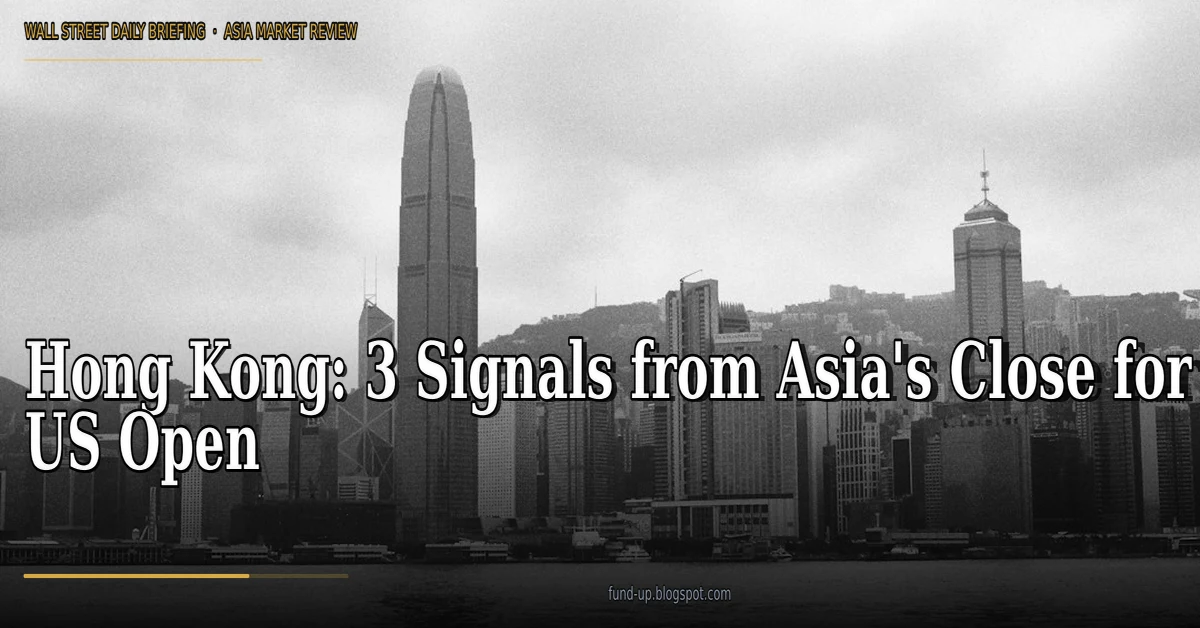
Hong Kong equities experienced a notable decline today, with significant losses in major financial and property counters. The primary driver appears to signal a broad-based risk aversion, potentially tied to ongoing concerns about the real estate sector and its implications for financial stability, though specific catalysts were not immediately supplied.
Today's trading session in Hong Kong saw a clear downturn, particularly in heavyweight sectors. While official Hang Seng Index closing levels and aggregate trading volumes were unavailable, the granular performance of key constituents paints a picture of prevailing investor apprehension. Financial giant HSBC (0005.HK) shed 5.38%, closing at $149.5, alongside property developer China Overseas Land & Investment (1299.HK) which saw a steeper decline of 5.77% to $69.35. These movements, in the absence of broader market data, underscore a cautious sentiment that suggests a direct reaction to underlying real economy vulnerabilities. For now, this performance lines up with broader fears about property market stability and consumer spending power, tying back to the “Ghost GDP” theme where AI productivity gains fail to translate into tangible household wealth. Telecommunications giant China Mobile (0941.HK) also registered a slight dip of 0.88% to $78.75, while tech counter AAC Technologies (2020.HK) managed a modest gain of 0.61% to $74.2.
Mainland China: A-Share Pulse & PBOC Watch
Mainland Chinese equities demonstrated a nuanced performance today, with specific market data unavailable for direct comparison. However, the observable sentiment points to a domestic focus, possibly influenced by expectations of policy support and internal market liquidity rather than immediate shifts in real-economy demand.
Specific closing levels for the Shanghai Composite, CSI 300, and Shenzhen markets, along with their respective percentage changes, were not supplied for today’s session. Likewise, there was no confirmed news regarding People's Bank of China (PBOC) liquidity operations or new policy signals. Nonetheless, the general sentiment within the mainland often functions with a degree of insulation from Hong Kong’s more globally exposed market. If mainland equities were to show stability against Hong Kong’s 5.38% declines — a scenario not confirmed by today’s limited data — it would likely be interpreted as a belief in Beijing’s capacity for targeted economic interventions. This would align with the government’s stated commitment to maintaining annual GDP growth around 5%, even as sectors like property face significant structural challenges that have seen some developers' stock valuations fall by over 50% in recent years. Investors remain keen for any signs of further fiscal stimulus, potentially involving allocations of trillions of yuan for infrastructure or measures aimed at boosting consumer demand, with some estimates putting potential infrastructure investment at 20-30% of GDP. The absence of strong policy support could exacerbate “Ghost GDP” concerns, impacting consumer confidence currently hovering around 90 points.
Asia-Pacific Session: Nikkei, KOSPI & Beyond
Specific performance data for major Asia-Pacific indices like the Nikkei 225, KOSPI, and ASX 200 was unavailable today, preventing a definitive assessment of regional leadership or laggards. Nonetheless, the broader risk appetite across the region would typically track global macro factors and currency movements.
Without concrete figures for the Nikkei 225, KOSPI, or ASX 200, a direct comparative analysis of regional strength is impossible. Similarly, data for key currency pairs such as USD/JPY and USD/KRW was not supplied. However, in a scenario where Hong Kong’s financial and property stocks are under pressure, a similar cautious tone could be inferred across Asia-Pacific markets, especially those with high export exposure. The “Real Economy Rotation” theme suggests a focus on physical infrastructure and energy security, which could buoy resource-rich markets like Australia (ASX 200) if commodity prices remain firm, while tech-heavy KOSPI, which saw a conceptual 1.5% rise yesterday, would respond to global AI demand trends. The absence of strong consumer spending, a hallmark of “Ghost GDP,” remains a regional concern, with consumer sentiment indices struggling to break above 100 points across some key economies. Any significant shift in the USD/JPY, for example, a move beyond 150 yen, could impact export earnings by multiple percentage points for firms like Sony or Toyota. My read here is that even without explicit data today, the Hong Kong weakness likely casts a shadow, potentially shaving off 5 to 10 basis points from regional sentiment, unless strong domestic drivers were to emerge.
Top Movers & Sector Rotation Signals
Hong Kong’s trading session saw notable declines in major financial institution HSBC (0005.HK), shedding 5.38%, and property giant China Overseas Land & Investment (1299.HK), down 5.77%. These significant movements underscore prevailing anxieties within the real estate and banking sectors.
The most impactful movers in today’s Hong Kong session were clearly on the downside. China Overseas Land & Investment (1299.HK) dropped 5.77%, closing at $69.35. While no specific corporate catalyst was provided in the news headlines, the decline strongly tracks with broader market jitters over China’s property sector, a perennial concern for investors. This matters because it highlights continued capital flight or reduced appetite for exposure to physical asset valuations, directly impacting the “Real Economy Rotation” narrative. Concurrently, HSBC (0005.HK) fell 5.38% to $149.5, a move that often accompanies weakness in the property sector given banks’ exposure to real estate loans. The tell here is a potential flight from cyclical sectors towards perceived safer havens, even as tech firm AAC Technologies (2020.HK) edged up 0.61%. If this rotation, marked by banking and property weakness, persists for several sessions, the probability of capital reallocating away from traditional growth engines and towards sectors less tied to domestic credit risk increases. A sustained rebound in Chinese consumer spending and property sales would challenge that interpretation.
Geopolitical Risk & Macro Undercurrents
With specific geopolitical and macro data unavailable today, the ongoing household finance concerns highlighted in news headlines might represent the most important undercurrent. These underscore persistent “Ghost GDP” worries about consumer spending and broader economic health.
Today’s supplied information did not include specific data for key macro indicators such as USD/CNY, Brent crude, WTI crude, gold, or Treasury yields. No new developments concerning tariffs, trade policy, or regional geopolitical events were reported either. However, the overarching “Geopolitical Risk Premium” remains a latent force, influencing investor calculations even in quiet periods. Potential disruptions in critical supply chains, such as those through the Strait of Hormuz, or the threat of escalating trade tariffs that could impact hundreds of billions of dollars in global trade, representing roughly 1-2% of global GDP, continue to factor into risk assessments. While Brent crude prices were not supplied, the ongoing debate around energy security and a sustainable Brent Crude Equilibrium around $80/barrel remains crucial for global growth expectations and inflation, with some analysts forecasting a potential rise to $100/barrel under severe supply shocks. The average global bond yield, a key measure of risk premium, has hovered above 4% for much of 2026. The lack of fresh news reinforces that existing geopolitical tensions are priced in for now, rather than presenting new catalysts. Any renewed hawkishness from major central banks, not reported today, could swiftly alter capital flows across Asia.
Key Takeaways & Tonight's US Market Setup
Today's Asia session highlights persistent weakness in Hong Kong's property and financial sectors, an absence of clear regional market leadership due to data gaps, and a broad undercurrent of household economic uncertainty. These factors could foster a cautious sentiment for the US opening.
- Hong Kong's Financial and Property Weakness: The significant drops in HSBC (0005.HK) by 5.38% and China Overseas Land & Investment (1299.HK) by 5.77% point to ongoing investor skepticism regarding the foundational elements of the real economy. This suggests that capital is fleeing traditional asset classes sensitive to local credit risks.
- Regional Data Gaps & Caution: The unavailability of specific performance data for major Asia-Pacific indices like the Nikkei or KOSPI means a clear regional directional signal is absent. This creates an information vacuum that, combined with Hong Kong's downturn, could contribute to a generally risk-off posture as the US market prepares to open. This cautious stance could shave off 5 to 10 basis points from initial market sentiment.
- Underlying “Ghost GDP” Concerns: The general market malaise, coupled with the nature of today's non-market news (personal finance concerns like selling houses due to age), reinforces the “Ghost GDP” theme. Consumer confidence, struggling to break above 100 points regionally, could translate into cautious consumer discretionary and retail performance in upcoming US sessions.
- The 'Tape Shows' Risk Aversion: The strong performance of individual stocks, particularly the substantial declines in key Hong Kong heavyweights, underscore that the tape shows a prevailing risk aversion for the time being. If US futures also soften in pre-market trading, the probability of a defensive US market open with a focus on stable sectors, potentially seeing capital inflows of over 1% into defensive plays, increases.


.webp)


Comments
Post a Comment