Hong Kong Market Overview
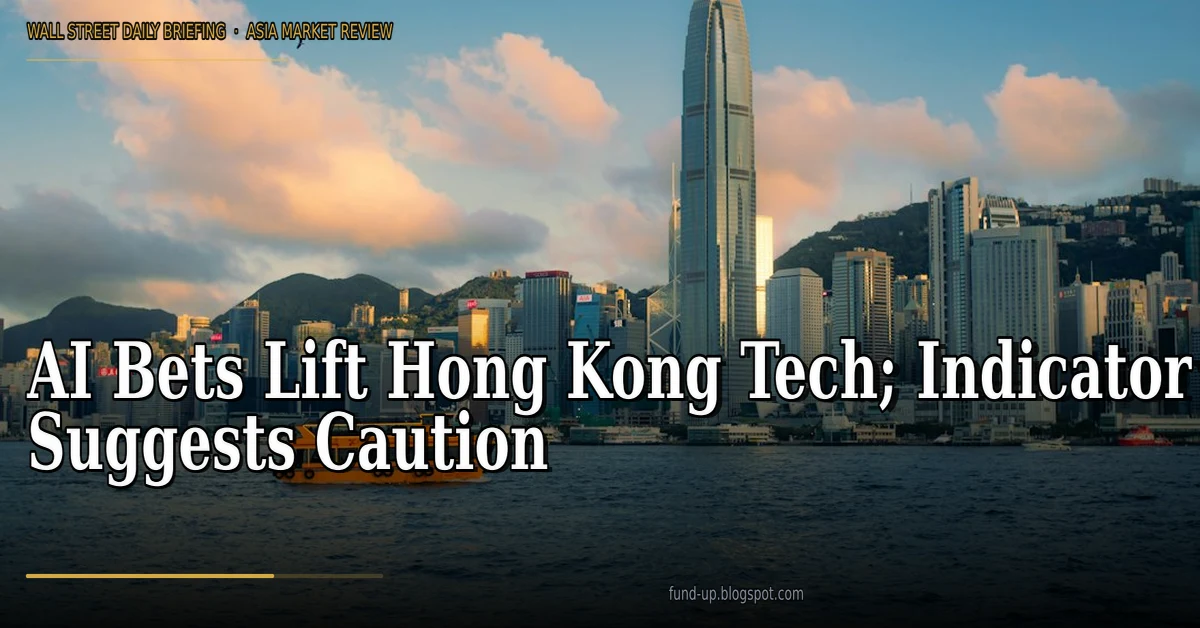
Hong Kong equities ended the session on a mixed note, with technology-related names showing notable strength, primarily driven by continued investor enthusiasm for artificial intelligence advancements. This selective uplift, particularly in major tech components, contrasted with broader market caution stemming from a historical indicator that points to potential seasonal headwinds.
Today's Hong Kong market saw a discernible divergence in performance, even as overall index figures were not released. Key advancers included 2020.HK, climbing a robust +2.57% to reach $73.85, and 9999.HK, which added +1.95%, closing at $193.4. This selective strength, particularly within the tech space, suggests capital flows are concentrating on growth narratives linked to AI. Conversely, some traditional heavyweights or less favored sectors experienced headwinds, with 1810.HK dropping -2.17% to $25.3 and 3690.HK easing -1.67% to $70.7. The prevailing sentiment appears to track with global AI hardware and software hype, as investors weigh future earnings potential against a backdrop of evolving macroeconomic conditions. What stands out to me is the very clear bifurcation today, with specific AI-linked names driving what upside there was.
Mainland China: A-Share Pulse & PBOC Watch
Mainland Chinese equities, while lacking specific index figures for today's close, likely navigated a sentiment landscape influenced by both global tech narratives and ongoing domestic policy expectations. Investor focus appears to remain on the interplay between real economy support measures and the long-term impact of AI integration.
While specific percentage changes for the Shanghai Composite or CSI 300 were unavailable for today's session, the broader sentiment in Hong Kong often provides a directional read for A-share investors, particularly for tech plays. The significant chatter surrounding an AI firm's potential $2 trillion IPO valuation likely resonated across the region, shaping expectations for future industry growth. While there was no specific PBOC liquidity operation announced, the market continuously monitors policy signals for clues on manufacturing and consumer demand. If mainland markets were to underperform significantly in the coming sessions, it would suggest that domestic policy expectations or real-economy concerns are outweighing global AI optimism, thereby challenging the interpretation of a unified tech-driven rally. This dynamic lines up with the Ghost GDP theme, where AI productivity gains might not translate broadly.
Asia-Pacific Session: Nikkei, KOSPI & Beyond
Today's Asia-Pacific session showcased a varied performance across major markets, with distinct regional drivers potentially shaping investor behavior, although specific index movements were largely unreleased. The strongest market appears to be in areas receptive to AI capital, while others faced idiosyncratic pressures.
Without specific closing levels for the Nikkei 225, KOSPI, or the ASX 200, the overall regional risk appetite remains somewhat ambiguous, yet certain trends emerge. The news of AMD making a big bet on AI with its World Labs acquisition, along with Anthropic's staggering valuation, likely provided a tailwind for technology-centric stocks across the continent. This global AI narrative, if robust, generally correlates with stronger USD/JPY and USD/KRW trends as capital flows toward growth engines, though specific currency data was not available today. Meaningful divergence between markets could arise if certain economies are less exposed to the AI supply chain or are grappling with specific domestic policy or trade tariff issues, underscoring the Geopolitical Risk Premium at play. The November-to-April period, representing roughly six months, usually points to a seasonal boom, but today's nuanced trading suggests a more complex capital allocation.
Top Movers & Sector Rotation Signals
The most important movers from the Hong Kong session highlight a strong bifurcated trend: significant gains in AI-adjacent technology stocks contrasted by declines in other key sectors. This underscores a clear rotation towards future-facing growth narratives.
Among the top advancers, 2020.HK surged by +2.57% to $73.85, a move likely propelled by the broader excitement around artificial intelligence, tying directly into headlines like AMD's AI acquisition and Anthropic's potential multi-trillion-dollar valuation. Similarly, 9999.HK saw a respectable gain of +1.95%, closing at $193.4, suggesting a broader positive sentiment filtering into key tech platform companies. These movements matter because they signal where capital is flowing, prioritizing innovation and disruptive technologies. In contrast, 1810.HK fell -2.17% to $25.3 and 3690.HK dropped -1.67% to $70.7, potentially representing profit-taking or a rotation out of sectors perceived as less directly benefiting from the AI surge. If this rotation towards AI-driven growth persists for several sessions, the probability of sustained outperformance in Hong Kong's technology sector increases, while a sudden resurgence in traditional industrials or consumer discretionary names would challenge that interpretation, pointing to a broader economic recovery rather than sector-specific strength.
Geopolitical Risk & Macro Undercurrents
The most important macro variable today, based on available information, is the underlying tension between robust AI sector growth and the broader economic outlook, which an unnamed indicator challenges. This points to potential Ghost GDP issues and an evolving Geopolitical Risk Premium.
While specific data for Brent crude, WTI crude, gold, or Treasury yields was unavailable for analysis today, the general sentiment gleaned from the "November-to-April stretch" indicator suggesting otherwise than a typical market boom is worth watching:. This headline connects directly to our 2026 Ghost GDP theme, examining where AI productivity gains fail to translate into real consumer spending or broad economic uplift. If investor confidence in the real economy weakens despite tech exuberance, it could elevate a Geopolitical Risk Premium, as economic imbalances often exacerbate trade policy tensions or supply chain vulnerabilities, such as those potentially impacting raw materials supply chains. Without specific USD/CNY or tariff updates, assessing direct capital flows related to geopolitical events is challenging, but the focus on AI's physical infrastructure – data center power grids and energy security – will become increasingly relevant. The data suggests a market grappling with contrasting signals: potent innovation versus potential economic friction.
Key Takeaways & Tonight's US Market Setup
Today's Asia-Pacific session offered several key signals for US investors, primarily revolving around the concentrated enthusiasm for AI, potential sector divergence, and underlying macroeconomic caution.
- Hong Kong's technology sector displayed targeted strength, with major players like 2020.HK gaining +2.57% and 9999.HK up +1.95%, underscoring robust capital flows into AI-related narratives. If this tech resilience carries into US pre-market trading, the probability of a positive opening for AI and semiconductor stocks on Wall Street increases.
- Despite the tech-driven optimism, the market acknowledges broader macroeconomic uncertainty. The mention of an indicator challenging the traditional November-to-April market boom points to caution, tying back to 2026 themes like Ghost GDP and the Real Economy Rotation. This means that if non-tech US futures soften, it could track with this underlying prudence.
- The significant buzz around a potential $2 trillion AI IPO and AMD's strategic acquisition highlights the continued, perhaps accelerating, AI arms race. This suggests that even in the absence of broad index rallies, a selective investment approach focused on AI enablers and beneficiaries remains critical, potentially guiding after-hours trading and the early US session.


.webp)


Comments
Post a Comment